Where to Exercise Outdoors in St Kilda—and How to Structure Your Workout
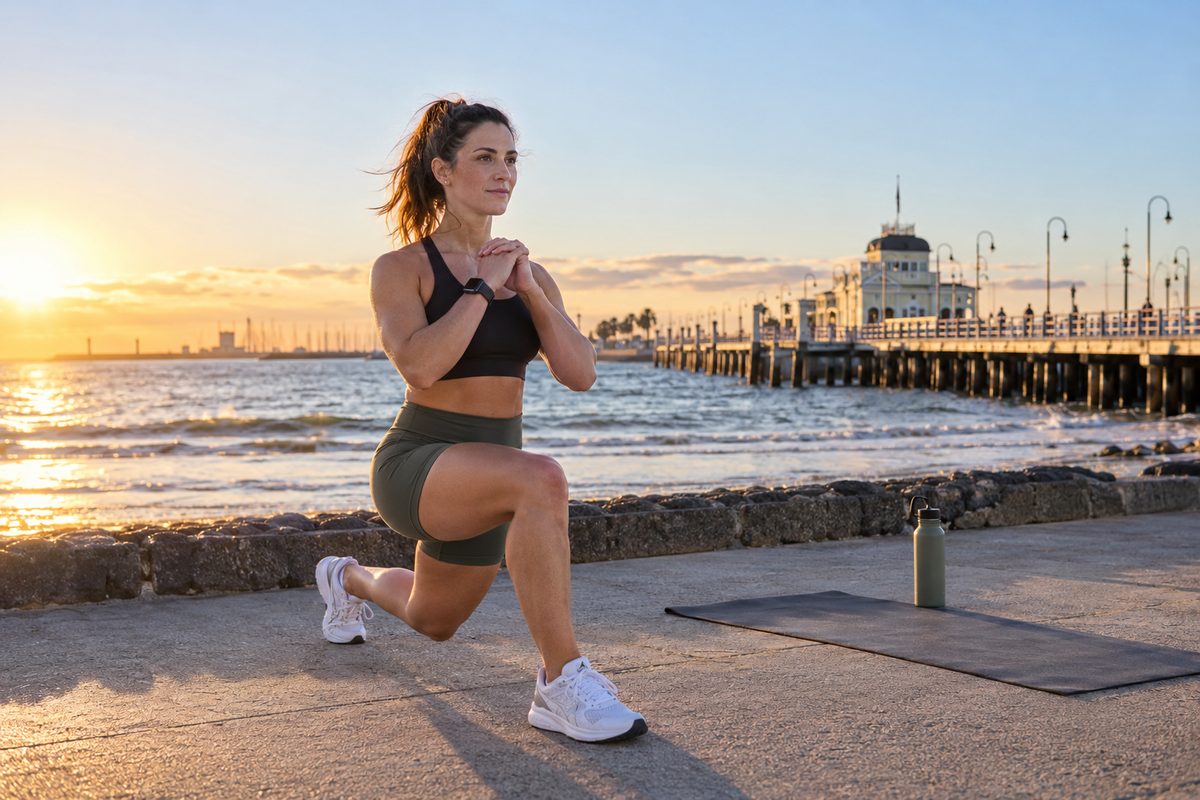
Match the spot to the job: use the foreshore path and St Kilda Pier for cardio, the grass and park gear for strength, and the sand for hard finishers. Then build every session in the same order: warm up, lift, push your heart rate, cool down. The place matters less than the plan. A great view with no structure gives you a nice walk, not a better body.
I have trained people around St Kilda, Victoria for years. The pattern is always the same. People pick a lovely spot, wander through a random set of exercises, and wonder why nothing changes after two months. This guide fixes both problems. You get the places, and you get the template.
Which outdoor spots in St Kilda suit which type of training?
Each spot has a strength. Use it for that, and ignore the rest.
The foreshore path and Esplanade
The flat, wide path along the bay is your aerobic base. It is long, it is smooth and there are no hills to hide behind. Use it for steady jogs, brisk walks and timed repeats. If you want to measure progress, pick two landmarks and time yourself between them each week. A faster time is proof.
St Kilda Pier
The pier is a straight line out over the water, which makes it a clean interval track. Walk or jog out, then turn and sprint back at a hard effort. The wind changes the effort on the way out, so your session feels different on every visit. Keep your eyes up and watch for strollers and fishing lines. A busy weekend afternoon is a poor time for sprints here. Early mornings are ideal.
Catani Gardens and the grass areas
Soft grass is kind to the joints and gives you room to lay out a circuit. This is where I run strength training sessions with bodyweight, bands and light kit. Lunges, step-ups on a bench, squats and rows with a band all work well here. Shade from the trees helps in summer.
The beach
Sand makes everything harder. Ten walking lunges on sand feel like twenty on grass. Use it for finishers, not for your heaviest work. Soft ground is unstable, so heavy loaded lifts belong on firm turf.
Albert Park and Lake
The loop around Albert Park and Lake is about five kilometres, which makes it a handy benchmark for runners and fast walkers. It has more space and fewer crowds than the foreshore. It also suits longer steady efforts when you want to build stamina without dodging tourists.
A quick tip on Port Phillip: the bay creates its own weather. A calm morning can turn into a stiff southerly by lunch. Check the wind before you choose your spot. If it blows hard from the water, train on the sheltered side of the trees and save the pier sprints for another day.
Why does the structure of a session matter more than the location?
Your body responds to what you ask of it, in the order you ask it. A random mix of exercises gives a random result. A planned session gives you a result you can repeat and improve.
One of my clients, a 41-year-old office worker, trained outdoors by the beach for four months with a friend. They loved it. They also did the same jog and a few sit-ups every time. When she started with me, we kept the same location and changed only the structure. Within six weeks she was lifting more, running longer and sleeping better. The scenery never changed. The plan did.
Good structure does three things. It protects you from injury. It keeps the hard work on the days you are fresh. And it gives you something to measure, which is the only way to know you are improving your physical fitness.
What is the best order for an outdoor workout?
Use this order every time. It works for a 30-minute lunch break or a full hour.
- Warm-up (5 to 8 minutes). Walk or jog easily, then add leg swings, hip circles, arm circles and a few bodyweight squats. Your muscles should feel warm and loose before you load them.
- Strength block (15 to 20 minutes). Do your hardest lifting while you are fresh. Pick a push, a pull, a squat pattern and a hinge pattern.
- Cardio block (10 to 20 minutes). Do intervals or steady work, depending on the day.
- Cool-down (5 minutes). Walk until your breathing settles, then finish with stretching.
Why strength first? Heavy lifting needs good form and a clear head. If you sprint first, you arrive at your squats tired, and sloppy reps cause injuries. Keep cardio second unless running is your main goal. In that case, flip the order and keep the strength work short.
How do you build the strength block with no gym?
You need less kit than you think. A resistance band, a backpack with weight in it and a park bench cover almost everything.
The push-up is the best upper-body exercise you can do outdoors. It trains your chest, shoulders, triceps and core in one move, and it costs nothing. If a full push-up is too hard, put your hands on a bench and lower the incline over time. If it is too easy, slow the lowering phase to three seconds or put your feet on the bench.
Here is a simple strength block you can run on the grass:
- Incline or full push-up: 3 sets of 8 to 12
- Split squat or step-up: 3 sets of 8 to 10 per leg
- Band row or backpack row: 3 sets of 10 to 12
- Single-leg hip hinge: 3 sets of 8 per leg
Rest 60 to 90 seconds between sets. That rest is not wasted time. It is what lets you lift well on the next set.
How do you keep getting stronger when you only have bodyweight and bands?
You use progressive overload. This means you make the work slightly harder over time. Your body only adapts when the demand rises. If you do the same ten push-ups for six months, you will get the same result for six months.
Outdoors, you have plenty of ways to raise the demand without adding plates:
- Add one or two reps each week.
- Slow the lowering part of each rep.
- Move from two legs to one leg.
- Add weight in a backpack.
- Shorten the rest between sets.
What I found with clients is that writing it down changes everything. Keep a note on your phone. Record sets, reps and how the last set felt. When the last set feels easy, make the next session harder. That single habit beats any fancy program.
How should you train your cardio outdoors?
You have two main options, and both belong in your week.
Steady work for your base
Aerobic exercise at a steady pace builds the engine that supports everything else. A 20 to 40 minute jog or brisk walk along the foreshore or around the lake is perfect. You should be able to speak in short sentences. If you cannot talk at all, you are going too hard for a base session.
Intervals for speed and fat loss
High-intensity interval training packs a lot of work into a short time. A simple pier version: sprint hard for 20 seconds, walk for 40 seconds, and repeat eight to ten times. Stay in control. A hard effort should feel like an eight out of ten, not a collapse.
Do not stack interval days back to back. High-effort sessions need recovery. Two per week is plenty for most people, and one is fine if you are new to training.
Use your heart rate as a guide, not as a rule. A rough maximum is 220 minus your age. Steady work usually sits around 60 to 75 percent of that number, and intervals push you toward 85 percent or more in the hard bursts. A cheap watch or a chest strap helps. If you have no device, use the talk test. Easy means full sentences. Hard means a few words at most.
What if you want one session that covers everything?
Circuit training is your answer when time is short. You move through stations with little rest, so strength and cardio happen in the same block. It is also easy to set up in a park.
Try this 30-minute grass circuit. Work for 40 seconds, rest for 20 seconds, and complete five rounds:
- Squat jumps or fast bodyweight squats
- Push-ups
- Band rows
- Walking lunges
- Mountain climbers
Circuits are great for fitness and calorie burn. They are less good for pure strength, because the short rests stop you from lifting heavy. If you want to get strong, keep a separate strength block. If you want to stay fit on a busy week, use the circuit.
Is a group session worth trying?
A fitness boot camp on the foreshore is a good option if you need people around you to show up. The energy carries you, and the sessions are usually structured by someone else. The downside is that the plan is built for the group, not for you. Your knee, your shoulder or your goal will not shape the session.
This happened to a client of mine who had joined a boot camp before coming to me. He loved the atmosphere, but he had a sore lower back that kept flaring up. Nobody had checked his hinge pattern. Once we fixed his hip movement and built the strength block around it, the pain went away and he returned to group classes feeling stronger. Groups are great for motivation. They are less reliable for correcting form.
When does a personal trainer make the difference?
A personal trainer gives you three things that are hard to create yourself: a plan matched to your body, form checks in real time, and someone who notices when you can add load. If you have a past injury, a long break from exercise or a goal with a date on it, one-on-one coaching saves you months of guessing.
It also takes the thinking out of the session. You turn up, and the warm-up, the lifts and the intervals are already laid out. If you want that kind of support, the team at St Kilda Personal Trainers run outdoor sessions built around exactly this structure.
What does a full week of outdoor training look like?
Here is a simple template for someone training four days a week:
- Monday: Strength block on the grass, then a short steady walk or jog.
- Wednesday: Pier intervals with a warm-up and a cool-down.
- Friday: Strength block again, with one more rep or more weight on each lift.
- Sunday: Long steady effort around Albert Park and Lake or along the foreshore.
Rest days matter. Muscle repairs while you rest, not while you train. If you feel flat for several days, take an extra day off. You will come back stronger.
What are the common mistakes to avoid?
- Skipping the warm-up. Cold muscles pull and strain. Five minutes protects your whole week.
- Doing the same session every time. Without overload, your body stops changing.
- Making every session hard. You need easy days to recover from the hard ones.
- Ignoring the weather. Heat, wind and rain change what is safe. Shift sessions to early morning on hot days and carry water.
- Skipping the cool-down. A few minutes of easy walking and stretching helps your heart rate settle and your body relax.
Your next steps
- Pick your two main spots this week: one flat path or the pier for cardio, one patch of grass for strength.
- Write a four-exercise strength block and record every set and rep.
- Run one interval session and one steady session, and add one rep or a few seconds to each the following week.
- Finish every workout with five minutes of walking and stretching.
- If you stall after a month, book a session with a trainer and have your form and plan checked.
Pick the order, track the numbers and let the bay do the rest.